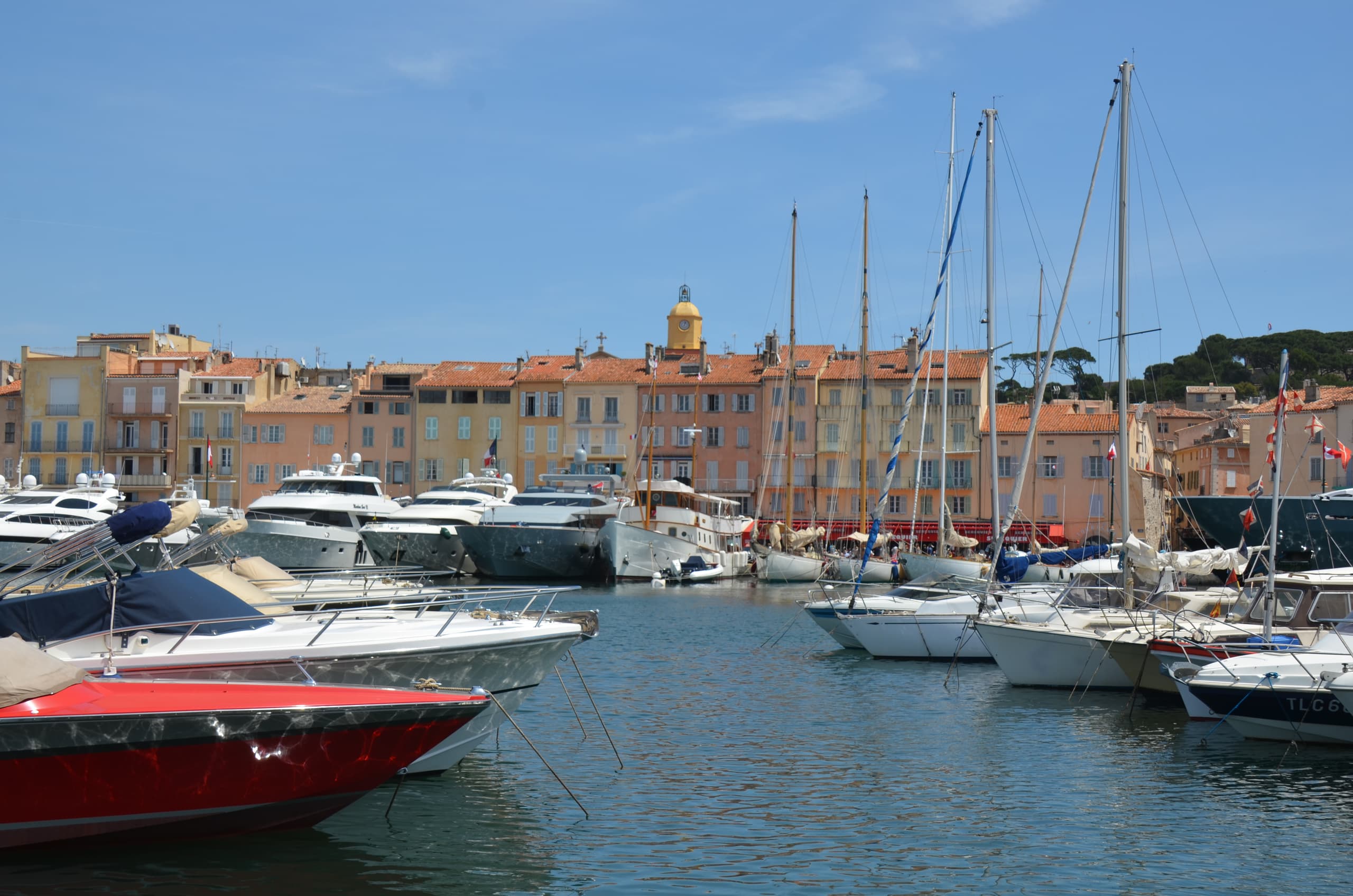
Les Voiles de Saint-Tropez, the October gathering
In late September and early October the port changes skin: more than 200 sailboats, from century-old classic yachts to the latest carbon racers, gather for Les Voiles de Saint-Tropez. The event descends from the Nioulargue, born in 1981 from a challenge between two crews with the finish line off Club 55, and relaunched under its current name in 1999 by the Société Nautique de Saint-Tropez.
Where to watch for free: the môle Jean Réveille, the breakwater closing the port, gives the best view of the starts and mark roundings. The Citadelle offers the wide-angle view over the gulf, and the coastal path towards Les Canebiers lets you follow the boats beating upwind, just a few dozen metres away.
Ashore, the show goes on: the quays are open to everyone, the crews parade at the end of the week, and the pontoons line up hulls you will not see anywhere else in the Mediterranean.
The Giraglia and the rest of the sailing calendar
The Saint-Tropez sailing season is far more than Les Voiles.
The Giraglia, in June, has been the Mediterranean offshore classic since 1953: three days of inshore racing in the gulf, then the big start towards the Giraglia rock at the northern tip of Corsica and the finish in Genoa. The early-morning start, hundreds of sails leaving the gulf at once, is one of the great sights of the summer.
Les Voiles Latines, in mid-May, fill the old port with pointus, tartanes and traditional lateen rigs: more intimate, very photogenic, and free.
The Trophée du Bailli de Suffren, in late June, sends classic yachts from Saint-Tropez all the way to Malta, in the wake of the 18th-century navy.
Even the Bravades in May have their maritime side: the bust of Saint Torpes is said to have arrived by sea, and the town celebrates it from the port too. Dates are in our events calendar.
Renting a boat without getting fleeced
You do not need a yacht to enjoy the gulf. Here are the honest price ranges.
Licence-free: boats under 6 horsepower rent with no paperwork at all, around 150 to 250€ a day. Enough to follow the coast from Les Salins to Les Canebiers, not enough to cross the gulf in a mistral.
RIB with a licence: 300 to 700€ a day depending on size and season, fuel on top. The most flexible formula for Pampelonne, Cap Taillat and the coves.
Sailboat or skippered day: allow 500€ for a half-day with a skipper. Zero stress, and the skipper knows the anchorages.
Traps to avoid: check what the deposit covers, whether fuel is included (rarely), and book early for July and August. Local tip: operators in Port Grimaud, Cogolin or Sainte-Maxime are often 20 to 30% cheaper than those at the foot of the village, for the exact same water.
On the water without your own boat
You can spend a full day at sea without renting or steering anything.
The shuttle boats: from Sainte-Maxime, a 15-minute crossing with a view over the whole gulf, around 8€ one-way, departures every 30 minutes in season. There are also links from Les Issambres and Port Grimaud. It is a ferry and a mini-cruise in one.
The taxi-boat: Saint-Tropez to Pampelonne by sea in 25 minutes, around 50€ per person. Practical details in our practical guide.
Sailing schools: the Canebiers bay hosts the municipal sailing school, with dinghy and catamaran courses all summer, while the Société Nautique de Saint-Tropez, founded in 1899, sails year round. The regular, moderate afternoon thermal breeze makes it an ideal spot to learn.
Day trips: shared catamaran outings, sunset sails, excursions to the capes. From 60 to 150€ per person depending on the formula, drinks often included.
Coves and anchorages of the peninsula
The peninsula offers some of the finest anchorages on the coast, provided you play by the rules.
Canebiers bay: the classic anchorage, sheltered from westerly wind, ten minutes from the village. Decent sandy bottom, busy in summer.
Pampelonne: the big summer anchorage off the beaches, sandy bottom, but exposed to easterly wind. Organised mooring zones with buoys have been set up, so check before dropping anchor freely.
Cap Taillat and Cap Lardier: the clearest water in the area, an almost island-like feel, on protected natural sites.
The rule that matters: anchoring in posidonia seagrass is forbidden and fined. Drop the hook on sand patches, the pale areas seen from deck, never on the dark ones. And inside the 300-metre band, speed is capped at 5 knots.
Mistral, levant, ponant: reading the gulf's wind
Understand the wind and you understand the day ahead of you on the water.
The mistral, a dry, cold north-westerly, sweeps the sky perfectly blue but kicks up a serious chop as soon as you leave the gulf. Above 25 knots, small-boat outings stop being reasonable. It is, on the other hand, heaven for kitesurfers and seasoned racers.
The levant, the humid easterly, blows straight into the gulf: it drives swell onto Pampelonne and makes the east-coast anchorages uncomfortable. Often a veiled sky.
The ponant and the westerly thermal breeze: the typical summer regime. A calm morning, ideal for paddling and anchoring, then a 10 to 15 knot breeze in the afternoon, perfect for light sailing.
Before heading out, always read the gusts rather than the average wind, and the trend across the day. Our weather page shows the wind, its direction and the sea temperature, updated daily.